Home

Recent Posts

Step-by-Step: How to Service a Car Carburetor


How to Service a Car Carburetor

A carburetor is an essential and necessary part of a lot of automotive vehicles, like cars. It essentially mixes air and fuel for internal engines so that the air-fuel ratio is done correctly, which is very important in the car’s functionality. Without a good carburetor, a car may become inefficient.  

How do you service a car carburetor? It is a straightforward 8-step process, from its complete removal to its complete reattachment. There is also maintenance, which can lengthen the longevity of your carburetor.

In this article, I will try to break down the step-by-step process as to how this is done, and ways that you can serve it, along with maintenance protocol. Below are two processes that are different but will achieve the same results. I have also included another process in servicing, which is a complete replacement, which is something you should consider given your scenario. 


What is a Car Carburetor?

Before I establish the steps necessary to service the carburetor for cars, it is important to get a baseline of understanding prior to repair, so that you, at least, know what that part does rather than dismantling it without purpose. 

Fuel and air make up the car’s motion from a carburetor. The same principle applies to trucks, aircraft, and buses, for example. Although they may not use a carburetor directly, a mixture of fuel and air is needed to get the vehicle in motion. 

Exactly how much fuel and air an engine needs is going to vary from moment to moment, given a couple of factors. One of these factors, for example, is how long the machine has been running, or how fast the machine is going. However, most modern engines use fuel injection to regulate this mixture or ratio of how much fuel and air you need. 

However, before that, all engines used the carburetor, which is sometimes referred to as a “carb”. Although I will not get into the science of this ratio, the car engine should have 14.7 parts of air to part of fuel. Too much air means that you burn “lean”, and too much fuel means you burn “rich.” In other words, too much air will give you a better fuel economy but sacrifice performance. Too much fuel will give you the opposite result. Both are bad for the engine. 

Gasoline engines are designed to take in the exact right amount of air so that the fuel burns properly, regardless if the engine is running from cold or hot top speed. Getting the mixture right is the job of the carburetor, a tube that allows air and fuel into the engine through valves. 

A prime example of carburetor usage was in the 1990s Chrysler model. This is the last year that carb was produced by the Chrysler company. Now, however, we have moved on from that with the fuel injection mechanisms that accomplish the same result. 

Before getting into how to service your carb, I need to note the importance of constant maintenance and cleaning. It is imperative to always check on the carb routinely. For example, look out for dirt accumulation. Once the carb is dirtied, it will negatively impact efficiency. This is why cleaning is so important.


Servicing a Carburetor and First Steps

Some People Start By Cleaning The Carburetor

If you suspect issues with your carburetor, the first thing you might want to try is a fast cleaning method as seen in the video above.

If not, there may be issues with the carburetor you want to check. One issue could stem from is the engine running for a very long period of time resulting in the fuel breaking down. Once that happens, your fuel-to-air ratio may be incorrect.  

However, this is only one example of many that could be the cause of your carb malfunction. Regardless of what the reason is, before servicing, make sure the tank fuel is good prior to start the engine. Here is the process of how to service the carb, regardless of what issue it has. 


1. Remove The Carburetor

First, we need to remove the carburetor completely. Before that, we have to turn the fuel valve off. Then, we track down the fuel line to the carb and remove the hose. However, if the line is very old, you would need to replace this to ensure there are no leaks. 

Now that this has been found, look for the overflow hose. The overflow hose should most definitely be removed. Next, we have to loosen the screws. This should be seen at the clamps, or at the front and back of the carb. At this point, the carb should be loose so that you can take it off with a twisting motion by hand. 

Now, with the carb visibly seen, take off the throttle cable by twisting the top cap. When it gets unscrewed, the slide should still be attached to it. Now, you should have the carb fully removed. 


2. Remove The Float On The Carburetor

To continue with this process, we need to remove the float, a part that is located in the bottom part of the carb. To remove, unscrew the four screws located there. However, do not just yank them out. It is imperative to remove with care and caution as this should strip off easily. Now, remove the float bowl. 

Now, we have to remove the float pin. This can be simply done by a needle-nose plier. So, first, we remove the float pin, followed by the bowl. In some modern carbs, a needle will be hanging on the float itself. If that is the case, it should fall off naturally. 


3. Service The Carburetor Jets

The third step differs from different carbs, but its jets need to be taken regardless. Most carbs have some splash plates in them, and those need to be taken off as well. These are screws that have a hole in the center of them. In turn, these holes are essential in making the fuel flow mix with the air. 

The plates also have to be removed. To look for it, keep an eye on a short and flat screwdriver head that is either flat or has a hex head. There is also the pilot jet, which should be long and skinny. Finally, if need be, take out the fuel splash plate. Remove it so that the float needle can be cleaned and removed. 


4. Remove The Remaining Carburetor Screws

Before cleaning the carb(only possible after removal), we have to remove the last parts from the outside. The air screw and idle screw can be removed with a flathead screwdriver. Usually, this is located on the side of the carb. To identify them, the idle screw is the larger screw. This adjusts the idle when the engine is at rest. 

The following action that you need to take is to remove the air screw. The air screw is much smaller and should be much easier to identify. This adjusts the airflow through the carb when the engine is running. 

To recap thus far, the air screw is smaller and responsible for the engine when active, and the idle screw is larger, and for the engine when at rest.


5. Cleaning the Carburetor

Before we begin this step, remove all the parts and gaskets, and O-rings. This is imperative for safety and efficiency in this process. The easiest way to clean the carb is to soak them in a cleaner.

This cleaner should be specific and should be properly labeled as a “carb and parts” cleaner. However, that can be sometimes pretty expensive. You can always also follow the instructions on the can if you want to spend. However, you can opt to clean with a spraying carb and choke cleaner instead. 

Before heading straight on, be sure that you are wearing safety glasses, as well as gloves, for the cleaning. Parts should be scrubbed with a wired brush and finally sprayed with the cleaner. In terms of the areas that you want to spray on, do it on the holes that the jets, idle screws, and float needles come from. 

For jet cleaning, be sure to spray it into the hole directly. To make sure it is clean, look through them with a flashlight. This will ensure that the part is cleaned the way you want it and that there have been no items being broken off throughout the process thus far.

If it is not as clean as you want, just blow compressed air through the hole to get rid of leftover debris. 

Then, we properly check if all the debris is removed from the carb itself. Dry it and all of its other parts through compressed air. Blow that into all the holes and blow off all the parts of the carb. When everything has dried down, install your new O-rings and gaskets back into the cleaned-up carb. 


6. Installation Of The Carburetor

Now, we install the parts in the opposite order in which they were removed. In this case, the float needle, as well as the fuel splash plate, need to be removed. The jets and the plates are installed next. 

Next, we install the outer parts of the carb. This step should always come first when it comes to the reinstallation of the carb back into the vehicle. Start first with the choke, then the air screw, then the idle screw. Remember that the air screw is the skinniest screw out of the three.

When installing this, screw it all the way then back the screw out a turn and a half. This would serve as the baseline for the engine, particularly when it is idling properly. 

Now, the idle screw should be screwed in just enough to hold it. Next, we install the float. To do this, line the holes up with the holes in the carb and slide the pin in. This process should be easy.

The pin should be slid freely, but make sure it is nicely centered for security. To make sure that the float is working properly, move it up and down to make sure the needles move with ease. If it does not, it needs a replacement.

Needles should not be that expensive on the market, so do not hesitate if a purchase needs to happen. It will cost more in the long run if you use bad needles in the carburetor.

Now, we install the float bowl onto the carb with the 4 screws at the bottom. The carb should now be complete, without throttle. 


7. Final Steps Of Installation Of The Carburetor

Here are the final steps. Install the throttle slide back onto the cable and put it through the top cap. Then, we put the needle in the slide and compressed the spring/hook at the end of the cable. Before sliding it into the hole, make sure the slot in the slide is lined up perfectly with the idle screw. 

When all of this is lined together, you can proceed by sliding in the throttle. After that, screw in the top cap. Now, you should be looking down either hole or screw the idle that you have next to it.

Naturally, the slide is going to rise. When that happens, screw in about half a turn. If you need more than a half-turn to screw it in, that is fine as well. Just make sure not to force it too much. 

Make Sure The Carburetor Is Secure and Run The Engine

Now, we should be sliding and wiggling the carb back into the rubber. Tighten the screws on the clamps to hold them in place. Install the fuel line and overflow line back into the carburetor. Finally, adjust the air and idle screw by letting your engine run. If you want the idle to increase, screw it in.  


Another Way To Service The Carburetor

Like many parts in the automotive industry, there are also different types of processes in how to service different parts.  

As we all know, the carburetor is found primarily in older cars, and it is working smoothly is essential to its functionality as well as the functionality of the car itself. It should be maintained and cleaned on a regular basis in order to make sure that we do not end up with a beat-down carb with huge fixing costs.

Constant low-cost maintenance is always the key. The following process is a little bit shorter and simpler and should only take about a half hour. 

First, turn the engine off. Then, remove the air filter housing so that you have quick and easy access to the carburetor. Get a couple of rags in place, along with a spray lubricant and carburetor/choke cleaner. Thirdly, locate the throttle control which allows you to manually operate the engine faster. 

The next step is to place the rags around the base of the carburetor, since the chemicals may lead to painted surfaces. The rag, therefore, will stop the possible runoff.

Afterward, we put on our safety goggles and sprayed the outside of the carburetor with a carb/choke cleaner. Be very sure to spray the connections and moving parts, like the throttle linkage. 

Next, we let that fluid rest and wipe it up. If there is a heavy buildup, clean with a small wire brush before the spray dries up. Before starting the car, spray a tiny amount of it into the carburetor itself.

After this, remove the rags themselves and any tools from the engine and start it. Do not ever spray the lubricant into the inside of the carburetor, only the outside. 

Now, we can properly start the engine and use the throttle, since you want to be able to run at a higher pm while you spray more carb fluid in there.

This way, you can push the cleaner through and will avoid stalling out the engine. Spray this in short bursts, run the engine faster, then slow it to a normal idle. Repeat the process a few times. 

Finally, just let the car go on idle for a few minutes. After, turn off the engine completely and reinstall the air filter. Now, it should be good to go when driving. Drive it for an initial 10 minutes.

This way, the cleaner is allowed to run through the system. Even if there is no significant improvement that you feel in the performance, this process that you went through has done tremendous amounts in carb preservation,


Knowing when to Replace The Carburetor

Now, given proper maintenance and cleaning processes, the carb can still be so bad and out of shape that you would need a new one completely. I will now talk about how to replace the carb when this happens.

When working with a system like this, always disconnect the battery to avoid any sparks that could be caused by touching the connections. This is very important since these sparks can come in both liquid and gas forms. To do this, locate the battery and remove the cables. To secure the cables, you are going to need a shield in a way that they cannot make contact with the posts while repairing. 

Now, we need to remove the air cleaner and any air intake ductwork. Most carbs on cars have an air cleaner that covers the air intake of the carb interior. This mainly keeps dirt and debris out of the engine. To find it, it is like a folded paper element or spongy material. The cover is held by screws or bolts. Once you identify this, remove the air cleaner and all ductwork. 


Disassembly of the old Carburetor

The next step is to remove the vacuum hoses and other connections. The way a carb function is that it reads signals and helps out the engine load. The signal is transmitted through the intake manifold. There could be one or more of these hoses connected to this apparatus. Before detaching, take pictures of the hoses in their original position so that you can reassemble them later on. 

Now, we have to remove the linkages. This is what controls the butterfly valve on the carb. The linkage and bracketry should be coming off next. To do this, disconnect the throttle linkage and any other bracketry and secure it on the side.

Now, disconnect with the fuel supply line. Typically, there will be a hose or metal tube, which is the supply line we are looking for. This line can either be held onto the carburetor by a hose clamp or threaded directly into it due to the metal line. 

Finally, we move on to the last steps. Release any residual pressure found in the fuel line. Depending on the type of fuel that you are using, there might still be pressurized fuel in the line. When doing a removal process, make sure you have something that could catch that escaping fuel. The next step is to remove the line and drain it out to avoid leakage. 


Removing the old Carburetor

After this, remove the carburetor. The carb should be held onto the intake manifold by any combination of nuts and bolts. The first thing to do here is to identify and remove the carb hardware. Now, we have to use the appropriate tools to remove it. These tools can be screwdrivers of many sorts, like a flathead or a hex. Either, given the carb model, should be fine. Then, we separate the carb from the intake manifold. Lift the carb out of the manifold. If there is any resistance, use a screwdriver. 

Be careful with this step, however. The body and flanges are fragile and can be damaged if you do not use cautionary measures. Never force anything in this entire process. This can cause unnecessary and unwanted damage to the carburetor and even the car itself. Some consequences might be vacuum leaks or rough running later on down the road. 

Then, we block off the manifold opening by placing towels in, to keep debris from falling through. Do not place them as far as they cannot be retrieved when it is time to install the replacement carb. The fourth step in this is to remove the old gasket between the carb and the manifold. 

Now, note that the gasket rule only sometimes implies. Not all manufacturers of carbs use a gasket in their system. If you do not have a gasket, that is fine. If there is a gasket there, use a razor blade to remove it. Please remove it gently so that it does not damage.


Preparing for re-installation of the Carburetor

The next step is to prepare for the new installation. First, we have to clean the carb and the intake manifold mounting flanges. Using a light solvent, clean them both rigorously. Also, make sure there is no dirt or debris. Then, we can install a new gasket. Place it onto the manifold so that it is between the manifold and the carb itself. Now, compare the old carb v the new one. Take a few minutes just to analyze them making sure the features are similar, as well as the fuel inlet style and mounting points. The fourth step in this process is to transfer parts from the original carb to the new one. Finally, remove any other towels that may have been placed into the manifold. 

Now, we can install the replacement after our prep. Set the new carb onto the intake manifold. Then, we can complete the installation. At this point, follow the removal process mentioned above, but in reverse order. You want to make sure that the vacuum hose and fuel line have been reinstalled. 

The next procedure for this phase is the most important. Here, I should be checking for leaks. As you may have noticed we have been taking a lot of precautions regardless of the processes we are talking about. It is important to do this so that you and your car are in good shape. First, reconnect the battery to its positive and negative ends. Now, we should build pressure on the carb itself. Depending on the type of fuel system that you are working on, apply fuel pressure.  

Finally, we look out for carb leaks. Listen for any type of whistling sound around the carburetor. If it is detected, shut off the engine and do not cause any sparks. The next step is optional. If there were any leaks found, repair them by tightening any fittings or fasteners. Now, we can restart the engine and check the new carb’s functionality. 


Installation of the Carburetor and Test Drive

Now we go on to the final steps of the installation. First, we reinstall the air cleaner and any other ductwork. Give a final visual inspection. Take some time to look at the new work that has been done, and make sure that the area is safe. The final step is to test drive the car. This is just to test out its functionality and if it is working the right way. If a fuel smell is detected, however, pull off on the side and shut the engine as soon as possible. Inspect the vehicle for leaks and repair as need be. 
Two Ways to Jump-Start a Car Without Another Car


jump start a car

Some car problems can be avoided, while others are inevitable; a dead battery, for example, is an issue that all vehicle owners will face at one time or another, usually at times when they are not near a convenient auto parts store to get the battery immediately replaced or charged. And the worst-case scenario, you might not have access to jumper cables to get your car going again with the help of another vehicle. However, fortunately, there are a couple of solutions to overcome this. 

How do you jumpstart a car without another car? If you have a dead battery and do not have access to jumper cables, there are two main ways to jumpstart the car without another car: using jumpstart kits or taking the manual transmission approach.

A sudden dead battery can lead to a lot of stress. However, the best way to prevent getting stuck in a situation where you can’t jump your car with another car is to be prepared before it happens. The remainder of this article will discuss the two ways you can jumpstart a dead car battery, in addition to how to recognize the signs of a dying battery, maintenance tips to help it last longer, and more. 


Understanding Car Batteries

A car battery is a charged, black rectangular box, designed to help support the electronic functions of a vehicle. It is usually found under the hood of most vehicles, although it can be assigned to different locations, depending on the car model. 

The battery is designed with two terminals, through which it releases and takes in charges. The primary function of the battery is to charge the starter. The starter, as its name suggests, is responsible for allowing the car to start. Another aspect of a vehicle that works with the battery is the alternator. While the battery charges the starter, the car alternator charges the battery. This complete circuit must be intact for a car to start properly. 


Qualities of a Good Car Battery

Because of their importance, it is easy to see how batteries can provide many benefits for vehicles to continue to run well. However, if they are not in good condition, to begin with, they can fail faster. The following are six qualities of a good, long-lasting car battery: 


1. Optimum Power Rate

According to Auto Batteries, the maximum voltage of a standard car battery is 12.6. Only a good battery can deliver the best power supply in a car’s system. A bad battery will tend to emit low voltages after a high-performance rate. 


2. Minimum Maintenance

Good batteries do not develop issues easily and therefore require less routine maintenance compared to older batteries. 


3. Fast-Charging

An excellent battery charges faster and stays charged for longer periods. A poor battery, on the other hand, may demand more than infrequent charging and will take much longer to reach a complete charge. 


4. Desirable Weight

A good battery has a standard and bearable weight. Although car batteries are naturally heavy, poor ones have excess weight due to wear-out and dead components that build up in the battery’s compartment.  


5. Minimum Discharge

Discharging is a common symptom of a bad battery; no matter the level of charging, it discharges easily. On the other hand, a good battery tends to stay charged longer, even at a low voltage.


6. Longevity

Finally, due to its performance and high efficiency, a good battery stays effective longer compared to average ones. Its parts do not wear out easily, even with high usage.


How to Make a Good Battery Last

According to Your Mechanic, the minimum lifespan of a car battery is two years, but it can last as long as five years—even six years—with the right maintenance. Many environmental factors can also influence the lifetime of your battery, including your geographic location, temperature, humidity, and more. A battery can perform at its best in the right temperature and humidity. 

It is recommended that you replace your battery every two to three years—or around when your warranty is set to expire—to avoid unwanted battery troubles; do not wait until it malfunctions before you decide to change it. You will save yourself lots of time and stress that way. 


Two Ways to Jumpstart a Car Without Another Car

Even with a good battery, car owners will eventually reach a point where it will exceed its warranty and start to go bad or lose its power. In these cases, you will likely need a jumpstart to get the battery going one more time to reach a destination where you can get it replaced or fully charged. 

Commonly, jumpstarts are performed using another vehicle; a set of jumper cables are connected to the appropriate battery terminals between each car—the goal being that the running vehicle’s battery will be able to provide enough of a charge to the dead battery to allow the car to start once again. 

However, there are two other ways you can jumpstart a car, without needing to rely on a secondary vehicle. Both are described below, each with its own series of steps: 


Jumpstart Kits

AD

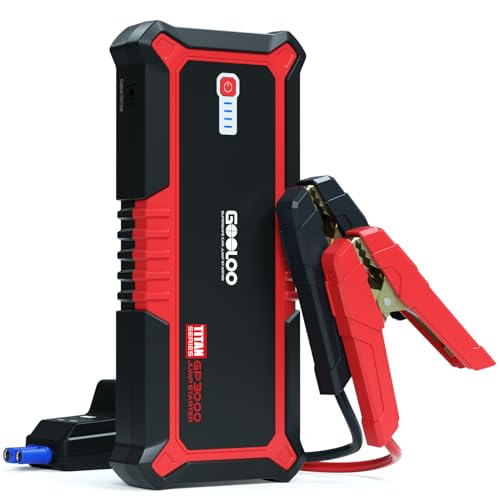
The first way to jumpstart a car without another car is by using a jumpstart kit. A jumpstart kit is a portable power supply, equipped with a movable battery. The battery has the same voltage of 12.6 as a typical car battery. The only difference is the design. 

A jumpstart kit’s features include a portable bag and cables. The bag is used to carry the kit, designed to prevent electric shock. The cables are used to connect the kit’s battery to a vehicle.

A major benefit of having a jumpstart kit is that it can be left in the car in case your battery goes bad or loses power. 


How to Identify & Test for a Good Jumpstart Battery

Of course, a jumpstart kit is only as good as the battery it contains. Make sure you test a newly purchased kit to make sure it is operational. There are four steps to do this:

  • Remove the jumpstart cables from the bag: The cables are the first thing to be conscious of because they are part of the kit. A bad cable might lead to sparks or fire. Note: the terminals are usually in (-) and (+). Most of the time, they are selected by color: the red cable denotes the (+) terminal, and the black cable denotes the (-) terminal.
  • Remove the car cables: Although the cables are made from the same materials, the car cables are different from the jumpstart. The car cables are connected to the car battery, while the jumpstart cable is the new cable removed from the kit’s pack. Make sure your car is off first. Now, remove the car cables connected to the battery, and place them on the safe side.
  • Connect the jumpstart’s cables: You have to connect the jumpstart’s cables similarly to the battery cables you removed. Usually in the form of (+) terminal of the battery to (+) cable or (+) terminal to the red cable. Also, the (-) terminal of the battery to (-) cable or (-) terminal of the battery to the black cable.
  • Turn the ignition key: When the connections are correctly made, then turn the ignition key and perform the normal car check-up, like switching on the headlight, the air conditioner, and others. If the jumpstart kit’s battery can help perform those actions, then it is a good battery. Otherwise, the battery is not fit to charge another battery. 

This testing process is important; the efficiency and how well the jumpstart kit’s battery performs will determine if it is capable of charging a dead car battery. 


10 Steps to Jumpstart a Car with a Jumpstart Kit

Using a jumpstart kit to get a car going again is the easiest and most straightforward way to jumpstart without needing another person or vehicle; all you need is caution. However, it is beneficial to also have gloves on hand while you work between the kit and the car battery. 


1. Turn the ignition key to turn off the car.

This is the first and most crucial safety measure. With any process that involves an electrical source or power, it is highly recommended to switch off any circuit that can make a “complete circuit.” By switching the car off, the battery is safe to touch, in addition to some other parts, without the risk of electric shock. If possible, you can remove the key from the socket and put it in a safe place.


2. Open the hood.

Most car hoods are on the front side of the car, although there might be some modifications depending on the specific model. Release the lever to open up the hood, which will either be located near the hood on the outside of the car or within the vehicle underneath the steering wheel. Some hoods require a holder to stay open, while others do not. If your hood needs to be held up, make sure you put a holder in place. 

Safety Tip: Due to the metal construction of the hood, make sure that while you work with the battery, you avoid touching the hood with the cables to prevent electric shock. 


3. Position the jumpstart kit in a safe place.

Because the goal is to use the jumpstart kit, it is highly recommended that you place it near the car battery, safe from falling or touching nearby metallic objects around the vehicle, such as the hood. Make sure that you do not touch the terminals with your bare hands while moving the kit, and avoid making contact with other objects with the kit. 


4. Connect the jumper cable.

The cables of a jumpstart kit usually have alligator clips already attached to their ends. In the event the clips are not pre-attached, you will need to fix them to the cable. You can do this by peeling back the cable covering and connecting the naked wire through the clip’s hole. 

When the cables are ready, connect the clips to the battery terminal by pressing the insulative head of the cable; then, the mouth will open wide. Carefully place it on the battery terminal in the connections of the (+) battery terminal to the (+) cable or red color. Likewise, the (-) battery terminal should go to the (-) cable or black color.

Make sure the connections are tight and correctly placed. Once you have successfully connected the jumpstart kit’s cable to the car battery’s terminal, you may notice a small spark; this is normal. 

Safety Tips: It is recommended that you wear gloves before you attempt to connect the clips to the cables or attach the clips to the battery. Do not touch the battery terminals with a wet hand or object besides the clips. 


5. Switch the jumper kit’s battery on.

At this point, you should be able to charge the battery. The jumper battery kit has a power switch; press it to switch it on. Be careful when dealing with the power source. The car battery will receive electrical charges to power it up after pressing the power button. 

You must charge the car battery for at least 5 minutes; whether you need to charge it for longer will depend on the condition of the dead battery. If it is totally dead, it might require more than the average charge time before it is up and running again. 


6. Turn the ignition key to start the car.

Once the car has charged and the appropriate amount of time has passed, do not remove the connections before you switch on the car; this is very important as it might discharge the battery, and you will have to start from the beginning.

After at least five minutes have passed, turn the ignition key; if the battery has charged enough, the car will start. You have to wait for the car to start; if it does not start, you will have to continue charging the battery with the kit for longer. 

You can only proceed to the next step if the car has started running. Make sure you do not turn the car off once you have got it going. 


7. Turn off and disconnect the jumpstart kit.

As mentioned in the previous step, you can only perform this step if the car has started. Do not remove the jumpstart battery’s cable if the car is still not running. You will also need to leave the car running during this process. 

First, switch off the jumper kit before disconnecting the cables. To remove the jumpstart cables, press the insulated ends of the clips together and raise them, so as to remove them from the battery. Gently remove the positive cable, then remove the negative cable. If you can remove the two together, you can go for it.

Safety Tips: As mentioned before, do not touch the terminals with your bare hands. When you grab the alligator clips of the cables, only handle them at their insulated ends, not the visible metal portion. 


8. Keep the car engine running.

This step remains to be very important as it determines if you will need to start all over again, or not. If you switch off the engine immediately after you have removed the jumper, you will have to start from the beginning because the battery is not necessarily charged all the way after five minutes of being connected to the kit. 

The main purpose of keeping the car running is to allow time for the alternator to pick up. Once the battery has picked up a little charge from the jumpstart’s kit, the signal will circulate through the car system, making the alternator functional.  

When the assisting battery from the kit is removed, the alternator will begin to charge the car battery on its own. You’ll have to keep the car running or drive it about after disconnecting the kit to ensure enough power stays within the circuit. 


9. Close the hood.

This is the last step. Make sure you remove any lingering tools or cables from underneath the hood before you latch it back in place. 

After this, you can then drive your car about and keep it running for about 30 minutes or as long as you need to get it to the right place for full battery charging or replacement. 


Manual Transmission Approach

Charging a car battery with the application of the clutch, gear, and brake is essentially the definition of a manual transmission. This method is also known as clutch starting since the clutch determines most of the starting processes. 

Note: The manual transmission method of jumpstarting a car, as the name suggests, will only work with a manual gear car system, or, in other words, manual cars. While this method could potentially be used to jumpstart an automatic car, it comes with a high risk of damaging the car in the process. Only use this approach with manual transmissions. 

There are not many tools required for this process; it only requires the help of an additional set of hands.  


1. Check the ground level.

The manual transmission method requires a high level of speed, at least beyond average. The speed is the propelling factor that stimulates the battery to receive charges, and thus, kickstarts the alternator to charge it. 

A car cannot reach a significant speed if it cannot start, so the trick to achieving it is to start off on a path with a little bit of an incline so that it can manage to roll down. The path or road should be about 300 meters long to give the car enough time to reach a decent speed coming down the incline. 

It is important to note that a car will not have full control while using this approach; only steering and braking will be available, so it is important to only use this method in an area where there are few to no cars or on the side of the road so as not to impede traffic or become a road safety hazard. 


2. Make a clear path.

As the process involves motion even at high speed, there is a need to know the specific road you choose to do this on. A road free from obstacles and potholes that may cause the car to lose control due to high momentum should be avoided.


3. Turn the ignition on to start the car.

The battery may be dead, but the steering and other components must be released. Turning the ignition key opens up the steering so the car can be directed. 


4. Change the gearbox to the second gear.

The ideal gear for the manual transmission jumpstart is the second gear because it has less torque, resulting in less jerking during the process. 

The first and third gears can be used, but the first gear has more torque than the second, and thus jerks more during the process. The jerking is not safe; it may lead to complications if mishandled. On the other hand, the third gear creates more speed than the second gear. The speed, if it is out of hand, might lead to an accident, especially if the car does not gain control of its operating system. 


5. Locate the hand brake.

The location of the hand brake varies in many cars; most vehicles have it beside the driver, irrespective of the driving side.

If you do not know where to find the hand brake, check the car manual or on the vehicle’s manufacturer’s site. 


6. Release the hand brake.

If the car is about to be set in motion, you will need to make sure the hand brake is released. Have a second person stand behind the car, ready to push the vehicle forward. 


7. Press and hold the foot brake and the clutch.

This is the preparatory mode of getting the car ready for a clutch start. The clutch and the brake should both be pressed all the way down. 


8. Release the brake when the car is in motion.

Slowly release the brake as the other person behind the car begins to push it forward. You will both need to work together to get the vehicle at a good speed as quickly as possible. The higher the speed, the quicker the car can respond to this process. Guide the car using the steering down the road or path. 


9. Release the clutch at 5mph (8km/h).

Once the car is in motion, at about 5mph or higher, the clutch should be released. At this point, the car should start. If not, you will have to repeat the previous steps and achieve a higher speed than before. 


10. Hold the steering wheel with a tight grip.

There is a high chance that the car will jerk as the car attempts to start up; make sure you have full control of the vehicle at all times. Avoid making unnecessary turns and continue on a straight path. 


11. Press and hold the clutch.

This step is very important, and can only be performed when the car is in motion after the clutch has been released initially and the car has started.


12. Change the gear to neutral and hold the brake.

After all the previous steps, find a spot where you will not create traffic. Change the gear to neutral and hold the brake. Essentially, you are temporarily parking the car. 


13. Leave the car running.

Sit in place and allow the car to run for at least 15 minutes. Do not turn off the car immediately after it has been parked; this could discharge the battery and force you to start the process all over again from the beginning! 


In Summary

The two main processes described above allow cars to be jumpstarted without the use of another car. The jumpstart kit is one method that can be used across all types of vehicle make and models. However, as mentioned before, the manual transmission method is only suited for manual cars; an attempt to use it on an automatic car can cause serious damage to the vehicle. 

The jumpstart kit can be left in the car, so it is ready to use whenever you need it the most. Although it can be an investment, it is well worth having on hand in case your car battery dies when you least expect it to. The manual transmission method does not require any equipment besides a buddy, but it can be more dangerous to perform, especially if you are on a busy street. 

With either method, make sure you keep safety in mind. Use insulated gloves and be mindful of where you place your hands or cables when using a jumpstart kit. Stay aware of ongoing traffic when pursuing the manual transmission jumpstart method. 

References:

mycarpick.com – Update: website unavailable

wikipedia.org

instructables.com

advanceautoparts.com

ifixit.com

Motorcycling Tips All First Time Riders In The US Should Know


Motorcycling Tips

First-time riders need to learn basic skills to ride safely and have positive experiences over time. Riding a motorcycle can be fun and can be a truly great experience.

First-time motorcycle tips include: practicing basic skills repeated, wearing safety gear, defensive driving, awareness of surroundings, and basic motorcycle safety checks.

Experienced bikers have already endured pain and have gone through a lot of scratches, scrapes as well as injuries in their biking experience. So here are some of the most important motorcycling tips that you definitely need to follow if this is going to be your first time out there in the open.


Excited About Riding A Motorcycle

The feel of wind hitting you while you cruise past everyone is incomparable. However, motorcycle statistics tend to show that they are one of the most dangerous vehicles, accounting for over 50% of the road accidents that take place on US roads.

This number goes down dramatically for those who take safety classes, wear safety gear, and are responsible drivers.

Beginners should take extra precautions in order to avoid accidents and enjoy a lifetime of biking experiences. After all, biking is one of the greatest experiences that many people enjoy in their lives.


Advice for Beginners

1. Easily Controllable Bikes Are Better

Now, this happens to be the ground rule of better biking, never get a motorcycle that is the best in the market as it would be too much for you to handle. You being a beginner wouldn’t know how to use its advanced controls which basically wastes your money for the time being and confuses you more than it helps you.

Always go for a motorcycle that suits you the best in the beginning. You can go for an advanced and better version after you are through with the first few months with decent control.


2. Practice Safe Riding Skills Often

Motorcycle safety is all about skills and practice. The more you practice, the better it is for you because you will then be able to handle tough turns, slide breaks, and more.  For this, I would personally recommend joining a motorcycle safety course that is going to help you a lot.

With some skilled advice and honing, you can easily learn how to maneuver your bike in emergency situations. Trust me; this is a lot better time and money investment than getting a fancy accessory. Make sure you practice what you learn. After all, practice makes a biker perfect.


3. Safe Motorcycle Riders Wear A Helmet

Motorcycle Helmet  

Photo Credit: https://in.pinterest.com/pin/137359857359577921/

Going biking without a helmet is like committing suicide even if you become an experienced rider. You never know what might happen as even though you might not be making any mistake, the person in front of you or behind you might happen to be unskilled and could cause a serious accident. So, always wear a helmet before biking.

It not only saves you from accidental crashes and slides; it also protects your eyes from dust particles and your mouth from bugs and other stuff. Always wear a helmet for better protection and focused vision on the road.


4. Motorcycle Riders Wear the Right Gear

What happens when you’re not wearing the right gloves and pants and accidentally crash your bike into something? Bruised and broken fingers along with badly scraped or maybe broken knees. If you want to avoid such outcomes, always remember to wear the right gear before you go motorcycling.

As a beginner, you should not focus on something very light or very heavy. You should go for a well-protective biker’s jacket and double-layered pants that allow easy movement as well as ample protection. Make sure all your gear fits you well, and you’re comfortable.


5. Safe Motorcycle Riders Avoid Bad Weather

Bad Weather Riding Motorcycle

You are a beginner. Your time will come when you too will be able to ride in the rain and windy weather. However, if you are planning to do so now, give that thought rest and practice for the unfavorable conditions you might encounter in bad weather.

In bad weather, you might encounter water-filled slippery roads, muddy terrains, strong winds, too much dust, and more. Your body should be accustomed to such conditions, and your skills should be good enough to pull emergency maneuvers whenever needed.


6. Safe Motorcycle Riders Learn Defensive Driving

Being a beginner means you need to be very attentive and need to pay attention to every single detail, following every single road safety rule. According to sources, most of the motorcycle accidents that take place are single-vehicle crashes by beginners. You can avoid these by following some simple rules.

These rules include not using a mobile phone while riding, always maintaining a safe distance from the front and behind, driving within the speed limit, and not getting over-excited. This is a road filled with vehicles that you’re going to ride on; always take care of yourself and be on the defensive rather than trying to show off speed and novice biking skills that could result in a crash.


7. Motorcycle Riders Are Aware Of Road Hazards

road hazards

Being too obvious and cool on the road is also a mistake. When you are riding on the road, you need to be aware of your surroundings so that you can easily handle unexpected situations. For example, there are some broken branches, pebbles, and leaves on the road which might result in sudden sliding or turning off the bike.

Always pay attention to the type of road you’re on and what surrounds you. If you have a better idea of your surroundings, you can not only save yourself; you can be a better bike as well.


8. Safe Motorcycle Riders Check Their Ride Before They Go

One of the most important tips for beginners is always to check your bike before you go out for a ride. Check if the headlights are intact and make sure the brakes are working. Don’t forget to take a look at the tires and other controls as well. Everything should be fine before you venture out on your ride.


Conclusion

Biking is an adventure-filled escape that excites you to the bone if you have that passion. To be a better biker, you need to be very careful and follow the rules as well as these suggestions so that you can enjoy biking for years to come, without much trouble.

Octane Booster: Top Picks


Select Best Octane Booster

From maintenance to fuel, your car runs better with the right parts and products. It is a good thing there are innovative products that can help you improve your engine performance, such as in the case of an octane booster.

So, what exactly is an octane booster? Simply put, it increases the level of octane in your fuel. This results in better engine stability when pistons are firing. This is especially true if you get a lower octane gas than is specified by the manufacturer.


My Picks for Octane Boosters

In this part, we will take a look at some of the best options that are available on the market, including some of the things that make them exceptional, as well as a few drawbacks that have been reported by their users.

**Below, you’ll see more detailed reviews, but you can also click the links above to see current prices and read customers’ reviews on Amazon.


1. Torco Accelerator Octane Booster

AD

Torco has made a reputation as a top-notch manufacturer of race fuels, which is already sufficient reason for you to have it considered above other models that are available in the market. They know how to achieve optimal performance of your engine, providing you with the assurance of its effectiveness.

With the use of this product, the octane of your fuel can be raised to as much as 105, which is pretty much impressive when it comes to what is claimed by other manufacturers. It can result in greater horsepower and efficiency, which are exactly the reasons why you will be using an octane booster in the first place.

Editor Rating: Great

Versatility is another reason why this product stands out from all others in the competition. The blend can be customized based on individual needs and preferences. You will have complete control over how it can be used.

Even if you have a sensitive engine, this octane booster will not cause any harm. As shared by the people who have already used this product in the past, catalytic converters and O2 sensors will not be damaged, regardless of how sensitive they can prove to be.

Things We Liked:

  • Impressive octane boosting capacity
  • Works as advertised
  • Allows engine to run smoothly

2. Klotz Octane Booster

This octane booster comes in one-gallon packaging, which is better than many others that are smaller in size. One thing that we love about this octane booster is that it is made from 100% pure synthetics. There are no chemicals that are used in its production.

It is also excellent when it comes to compatibility, making it useful in a wide array of applications. It can be blended with oils and lubricants, even if they are subjected to high temperatures. They can also be mixed with petroleum oils, synthetic lubricants, and gasoline.

AD

Editor Rating:  Great

This octane booster is made from concentrated tetraethyl lead substitute, a premium formulation that can improve the octane rating of petrol by as much as 10 numbers, which is equivalent to 100 points. With the use of this octane booster, the negative impacts of spark knock and engine detonation can be alleviated.

Octane boosting is not the only benefit that can be achieved with the use of this product. Taking a look at the octane booster reviews that have been shared by its users, we also conclude that it can be effective in providing lubrication to the upper cylinder. This makes it beneficial in more ways than one.

Things We Liked:

  • Gives exhaust a good smell
  • Prevents rough idle in engines

3. Lucas 10026 Octane Boost

One of the things that will captivate your attention about this product is its practical design, making it one of the options that are perfect for storage or use. However, its small packaging may be a deterrent for some. One bottle contains only 16 ounces. At such size, however, it is pretty much impressive that it can already treat up to 25 gallons of fuel.

If you are looking for an octane booster that can be safe for different types of engines, this is one of the best options that can be taken into consideration. As the manufacturer claims, it can be used even for catalytic converters, oxygen sensors, and turbos. Whether you have carbureted or fuel-injected engine, this can also prove to be a perfect choice.

AD

Editor Rating:  Great

What exactly can you expect from the use of this product? Well, one would be having cleaner fuel burn, which is beneficial in terms of the production of fewer emissions. This is an excellent way to be more eco-friendly. In addition, it can also provide more boost compared to what can be offered by most of the brands that are available in the marketplace.

So, how is this product able to do what it claims? This is possible through the use of a chemical known as MMT or Methylcyclopentadienyl Manganese Tricarbonyl. The latter increases the density of fuel and allows it to burn longer.

Things We Liked:

  • Eliminates spark knocks
  • Easy to use

4. Royal Purple Max Boost

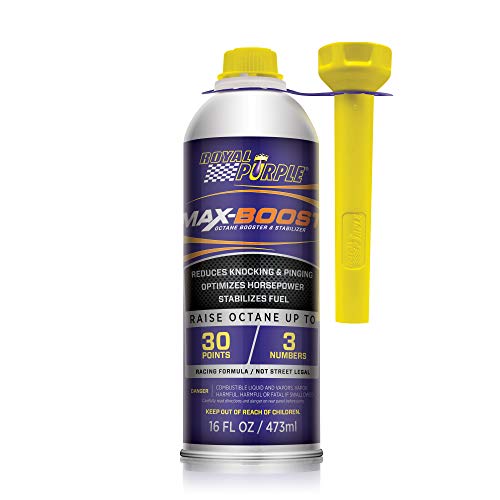
This high-performance octane booster has also been given positive feedback by its users. From the octane booster reviews of other people and based on our independent evaluation, we can say that this is indeed one of the trustworthy options that you can consider.

It is safe for use in a wide array of situations. For instance, as it has been asserted by the manufacturer, you can have it used for unleaded and leaded gasoline, ethanol blends, and even in reformulated petrol. It can also be safe for catalytic converters and oxygen sensors.

AD

Editor Rating:  Great

The premium formulation of this octane booster allows it to deliver a diverse set of benefits, such as the elimination of detonation due to engine damage and knocking, which commonly happens when you are using gasoline that comes with low octane.

With this product, you can raise octane by as much as 3 numbers or 30 points. This may be a bit minimal compared to other alternatives, but if you do not need much octane, this is going to be a decent option.

Things We Liked:

  • Economical
  • Improves throttle response
  • No added alcohol

Things We Didn’t Like:

  • Contains lead

5. 104+ 10406 Octane Boost

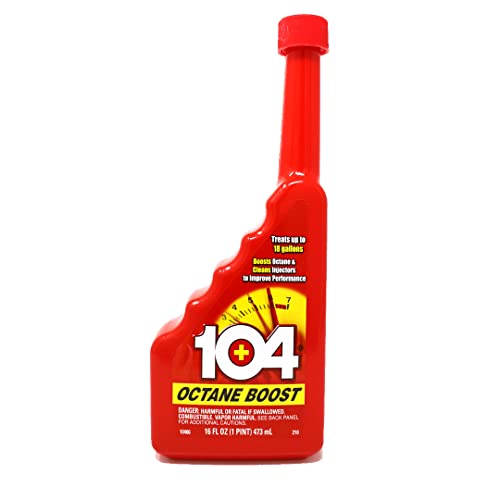
Of the five products that we are tackling in this guide, this is perhaps the least effective in terms of its ability to improve octane. Nonetheless, it can deliver acceptable results, which is why it can still be considered an ideal option in spite of the minimal octane boost that it can provide.

This is an effective fuel injector cleaner. With such, you can anticipate that it can do a good job in terms of improving fuel economy, engine power, elimination of throttle hesitation, and reduction of engine knocks.

AD

Editor Rating:  Great

Acceleration, gas mileage, and power are some of the benefits that can be enjoyed with the use of this product. Aside from these, it has also been well-received by many people because it can be used safely even for oxygen sensors and catalytic converters.

Lastly, it is also worth noting that this product does not come with an expiration date. However, proper handling and storage will be necessary in order to preserve its best quality. Watch out for flakes and sediments, among other signs of possible contamination.

Things We Liked:

  • Cleans up carbon
  • Prevents pinging

Do Octane Boosters Really Work?

A lot of people are hesitant about its effectiveness. As it has been proven by others, and as we will assert, octane boosters work. However, this will all depend on the specific products that you will choose. Do not fall into the trap of deceptive advertising. Some promises are too good to be true, and hence, it pays to be always attentive to the claims that are made by the seller.


Benefits of Using Octane Booster

The main benefit of using an octane booster is that it improves the compression of the fuel before it detonates. This is expected to increase the power of the engine and will result in a higher level of efficiency. Nonetheless, the benefits can be yielded only if you choose the right product and if you make sure that the vehicle will be maintained in its best condition all the time. It can also increase the resistance to pre-ignition, which is one of the reasons why it is instrumental in terms of being able to improve the power of the engine.


Essential Factors to Consider

In order to evaluate the possibilities, it is important to keep the following things in mind, which will increase the likelihood of making the right decision:

  •  Cost: This is perhaps the most important for a lot of people. Many people may be tempted to choose the one that comes with the cheapest price tag. Nonetheless, being cheap does not always guarantee being the best. In most instances, you should not hesitate to spend more if this means that you will be able to enjoy better quality and functionality.
  •  Reviews: If you are clueless about which product you should choose, it would be best to go online and look at the octane booster reviews of other people. Pay attention to what they are saying about the performance of some of the available products. Through the insights and experiences that they share, it will be easier to make the right choice.
  • Octane Boost: This is one of the most important technical specifications that deserve your attention. Simply put, this refers to how much it can improve the octane in your petrol. This is specified by the manufacturer through their individual methods and not by a central or regulating agency. This means, the manufacturer can easily make their own claims, so do not always trust what you see.
  • Frequency of Use: You also need to consider how frequently you will need to use the octane booster as this will have an effect on how economical it will be in the long run. Keep in mind that this is not one product that you use only for a single time so the costs can be recurring.
  • Size: This is important because it will be indicative of cost. Even if it is expensive, if it is in a large container, you should not hesitate to have it purchased because it only means that it can be useful for a longer period, and hence, the cost-per-use, when computed, can end up being cheap.
  • Compatibility: Before you make any final decision with regards to which one to choose for the best octane booster, you also need to think about the vehicle that you have, or more specifically, the type of engine that it has. Different engines may have different requirements, so you have to make sure that you are using a compatible octane booster.

Conclusion

Indeed, your search for the best octane booster will not be an easy one, but you should never make a decision in haste. Deciding on the basis of price alone is never sufficient. You have to consider what other people are saying by reading octane booster reviews and be diligent in the evaluation of the possibilities. If you want to make the right choice, keep an eye on the options that we have recommended above, and for sure, you will not have regrets.

Best Brake Controllers: Stay Safe While on the Road


Best Brake Controllers

The brake controller is one of the most important parts of your vehicle, which is especially critical for your safety. While it can be beneficial in more ways than one, this will only be the case if you choose the right product.

A brake controller an electrical device that is used to control the level of braking on a trailer you are towing. Choosing one that controls the correct number of brakes is essential. Deciding on a time-delayed or proportional controller usually depends on your budget, although proportional is generally considered better all around.

Thinking about which one to choose? Keep reading the rest of this guide, and we’ll help you make the right decision. We’ll also let you know what they do, their benefits, different types, and the factors to consider as you try to differentiate the possibilities.


What is a Brake Controller?

A brake controller is one of the most important tools to have when you are towing a trailer. It is mounted on the dashboard of the vehicle on the side of the driver. It is a device that plays a critical role in the improvement of your safety and the protection of the trailer.

When you hit the brake, the brake controller will activate the electric or electric over the hydraulic brake. This will make it easy to stop and slow down after hitting the brake. Without it, the vehicle that is being towed will just keep on moving.


Top Picks for the Best Brake Controllers

In this section, we will briefly discuss some of the best options that are available in the market, as well as the features that make them exceptional:


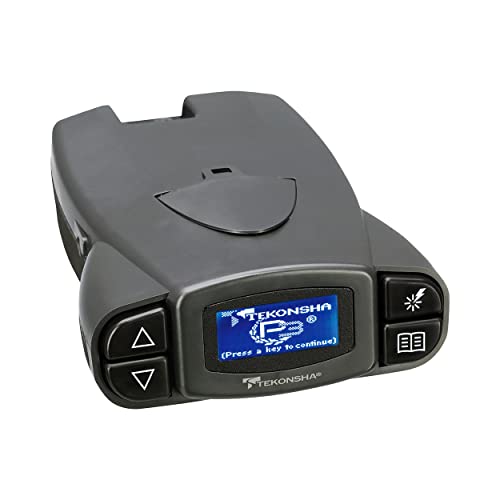
1. Tekonsha 90195 P3 Electronic Brake Control

AD

This brake controller has an impressive set of features. Among others, one thing that we love is the LCD screen, which is easy to read regardless of the external conditions. You even have the option to change the color of the display. In terms of versatility, this can also be a good choice.

You can choose from electric trailer brake or electric over hydraulic, depending on which mode is more suitable for your situation. The dash-hugging profile is also a plus, which means that it will not consume too much space. It also has a plug-n-play design, which simplifies the entire process of its installation.

Main Product Features:

  • Display: LCD
  • Buttons: 4
  • Axles: 4
  • Weight: 1.4 pounds
  • Dimensions: 4.5 x 3 x 10.6 inches

Pros:

  • Delivers reliable performance
  • Plug and play mode
  • Easy to see the display

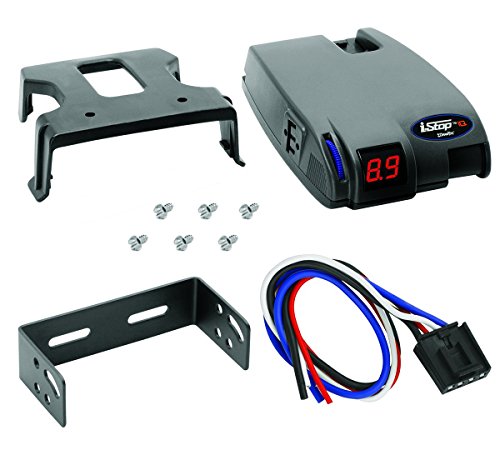
2. Draw-Tite 20191 I-Stop IQ Electronic Brake Control

AD

The aesthetics of this brake controller is perhaps the first thing that you will notice. Its stylish construction can provide you with a compelling reason to have it chosen above all others. It comes with a self-diagnostics feature, which will make it a reliable companion while on the road. There is an LED readout that will provide you with an immediate notification when there is an issue that warrants your attention.

The product includes the hardware you will need for mounting the brake controller. Best of all, the manufacturer is offering a limited lifetime warranty, which is one thing that can eliminate all the doubts that you have about this product.

Main Product Features:

  • Axles: 3
  • Weight: 1 pound
  • Dimensions: 4.4 x 2.6 x 8.5 inches
  • Warranty: Limited Lifetime Warranty

Pros:

  • Attractive design
  • Has a mounting clip included
  • Plug-n-play functionality

3. Hopkins 47297 INSIGHT Brake Control

AD

If you want to have safer and smoother stops, this is the perfect product to have in your vehicle. It does not run short in terms of impressive features. Among others, one thing that you might love the most is its digital power, which greatly improves its accuracy and reliability. When it comes to mounting, you will also be happy with this product.

There is no need for drilling, which makes its installation a snap to accomplish. It is also versatile, basically because you can use it whether you have a hydraulic or electric brake. Lastly, its use is also pretty much straightforward. There is no need to have technical knowledge or experience.

Main Product Features:

  • Braking Capacity: 8
  • Sensitivity Levels: 7
  • Weight: 1 pound
  • Dimensions: 6.3 x 5.7 x 3.1 inches

Pros:

  • Easy to mount
  • Digital power and sensitivity
  • User-friendly

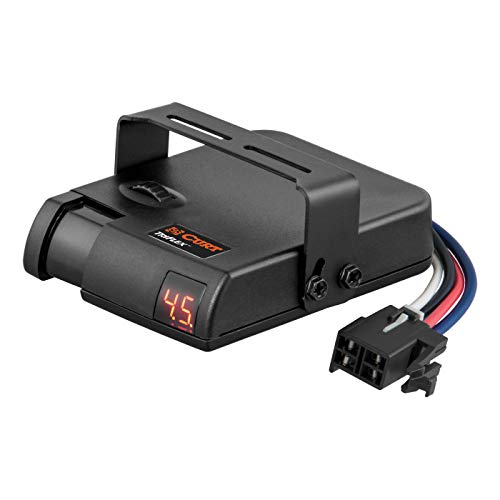
4. Curt 51140 TriFlex Brake Control

AD

If quality is the most important consideration, this is one product that should be on the top of the list. It has basic features, but it is not as advanced as those that you can find from the higher end of the market.

There are quick plugs that are incorporated in the controller, which is beneficial in terms of making the installation a snap to complete. As the manufacturer claims, the assembly of the unit will be completed within ten minutes. It also offers ease of calibration for a variety of towing situations.

Main Product Features:

  • Axles: 4
  • Weight: 8.8 ounces
  • Dimensions: 2.6 x 5 x 7 inches
  • Warranty: Limited Lifetime Warranty

Pros:

  • Simple to setup and use
  • Long-lasting

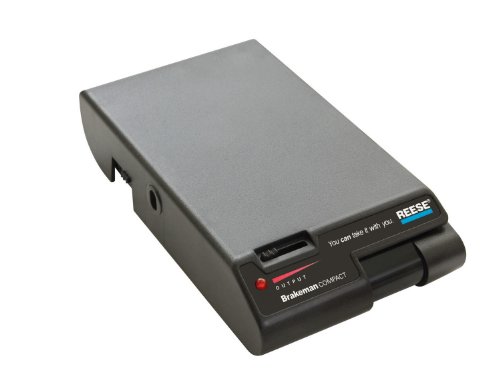
5. Reese Towpower 74642 Brakeman Timed Compact Brake Control

AD

This is another product that you might want to consider if you are looking for a cheap option that works well. It comes with a slide adjustment and is compatible with anti-lock braking systems.

This wired system is plug-and-play installation, which simplifies installation for many vehicles. Lastly, this can also prove to be an exceptional product because it works well for a price that most people like.

Main Product Features:

  • Axles: Up to 4
  • Red indicator light
  • No moving parts and no leveling are required
  • 100% Solid State

Pros:

  • Does not require leveling
  • Compact

Different Types of Brake Controllers

Thinking of buying a brake controller? If you are ready, the first thing you have to do is determine the type that will be best suited for your needs or your vehicle. In this case, the following are the options that you will be confronted with.

AD


Proportional Brake Controller

This type comes with an inertia sensor, which will be the one responsible for being able to detect the pressure that you will apply upon braking. This also automatically matches the force you have applied to the brake of the trailer. In simple words, it replicates how intensely you brake.

A proportional brake controller is a perfect option if you frequently tow at heavy loads. One of its biggest benefits is that it can improve the driving experience by making it smoother. It is also efficient and safe. Lastly, it is beneficial because it leads to less wear on your vehicle.


Time-Delayed Brake Controller

In this type of brake controller, a pre-determined amount of pressure is applied to the trailer’s brakes. This pressure will depend on the weight of the vehicle’s load. Every time the brake is triggered, a signal is received by the controller.

One of the best benefits of this type is that it is more affordable than its counterpart. Its installation is also less complicated, making it perfect even for novices. It also offers versatility because you can mount it in a variety of positions. However, there are also drawbacks. For instance, it leads to uneven pressure, which can increase wear. If you are a casual user, this will prove to be an exceptional choice.


Integrated Brake Controller

This type is actually different from the two categories that have been mentioned above. In this case, the brake controller is already included as a part of the vehicle. This means that there is no need to purchase and install it separately as it is already a part of the package of the vehicle when it is purchased.

More often than not, the one that already comes integrated into a vehicle is a proportional brake controller. It can be seen as a part of the heads-up display or the infotainment system. This is a cheap option because it means that you no longer have to buy an aftermarket brake controller unless you are unhappy with the quality of the one that is included in your car or truck.


Benefits of Brake Controllers

Still wondering about purchasing a brake controller? The following are some of the benefits that might convince you to purchase the latter.

  • Improved Safety: One of the best things about using brake controllers is that you will be safer on the road as it increases the braking power of the trailer, regardless of the weight of the load.
  • Drive Smoothly: It is also going to improve the overall driving experience by making it smoother, especially every time you hit the brake.
  • Fuel Efficiency: Braking and fuel consumption are two things that are related to each other. The more power is needed to bring a trailer to a stop, the more fuel is consumed. Therefore, if you can brake smoothly, this can also minimize the amount of fuel that is consumed.

Choosing the Best Brake Controllers

With too many options that are available in the market, which one should you choose? If you have no idea what to pick, below are some of the most important factors that should be taken into consideration:

  • Reviews: One of the first things that you should do is gather feedback from other users. A lot of buyers are generous enough to write about their actual experiences. You can learn a lot from their insights, making it easier for you to narrow down the possibilities.
  • Installation: You do not necessarily need a helping hand from the pros to complete the assembly of the brake controller. Choose one that comes with a user-friendly assembly, which means that installing it will be an easy task, even without having technical knowledge. It will be good if the product offers a plug-and-play functionality, which will simplify the entire process of installation.
  • Display: Another important thing is for the brake controller to have an excellent display. In this case, most of them will either have an LCD or LED display. Pick one that will be easily viewable regardless of the external condition, such as when it is bright or dark.
  • Controls: You should choose a product that comes with user-friendly controls. It must be easy for you to access the buttons. They should be strategically positioned and should remain functional for an extended period.
  • Axles: When looking at the technical specifications of the product, one thing that should be given emphasis would be the number of axles. If you want advanced functionality and better efficiency, it will be good to choose those that can handle up to 4 axles.
  • Warranty: This will be indicative of how confident the manufacturer is about the quality of their product. Extensive warranty coverage is always better. They must be able to offer free repair or replacement of parts if the brake controller proves to be defective.

Conclusion

Of the brake controllers that have been mentioned above, which one is the best? If you ask for my personal opinion, I would say that it is Tekonsha 90195 P3 Electronic Brake Control. This is a great choice because of its quality and functionality. You can be confident that it will be able to deliver a high level of reliability.

Are you looking for other products for your car, trailer, or RV? Click here and learn from the insights that we will be sharing in our buying guides.

How To Paint Your Car Within A Set Budget?


How to Paint Your Car_

Traveling with your partner on a windy highway gives you a romantic feel because a highway trip voyage using your car with your partner is everyone’s dream. However, while you are dreaming, there is a pause in your dream. Your car has turned old, and the paint of the car is coming off.

To paint your car on a budget means you’ll need to do most of the labor yourself. Instead of sending the car paint and body center, you can paint your own car. All you have to do is to follow the procedures prescribed.

By using the specified procedures, painting your car is easy and simple, and everything comes under your budget. On the other hand, you just need patience and perfection while doing the job. Thus, it is your part to make your car look sexy.


How to Paint your Car within a Set Budget?

To paint your car, just follow these simple steps:

  • Remove the rust from your car
  • Correct the car panels
  • Follow the safety measure
  • Seal the unwanted area of the car
  • Get primed
  • Fuse the paints and spray them on your car
  • Unseal your car

A good tolerance level and accuracy should be noticed; or else you will spoil the good food.


1. Remove The Rust From Your Car

Remove The Rust

The foremost enemy of any metal is rust. Yes, it is the term for the oxidation process of steel. It normally occurs when the metal is exposed to a moisturized surface. A rust surface of any car can put the car to death.

The best solution to stop the rust permanently is to eliminate the rust from your car. The process of removing the rust accomplishes a change in the panel of rust surface. Sometimes, the entire panel needs a complete replacement.

Weld the panel to stick firmly on the body of the car. Cut the defective area, get the panel placed there, and finally weld the panel to replace the rust one. In some phases of metals, the rust is removed with a chemically treated process such as POR-15.

This is the very first step before stepping into the painting process. These are the best rust remover for cars.


2. Correct the Car Panels

A panel with a straight texture will give an elegant look to your car. Therefore, to make the panel straight, we need to correct the panel. To get a straight design to your car body, you need fillers. High-quality filters can elevate the car’s layout.

Do not use cheap or low-quality fillers. It may lead to the defectiveness of your car panel. Thereafter, applying the filler to your car panels prepare your car for a sandblast. The final step is blocking and sanding the entire body alignment of the car.

Block sanding is a precarious step. It makes the car panel align straight. You need to spend a lot of time on this step. Because this process alone can give you a glamorous look to your car.


3. Follow the Safety Measures

Paints may harm your skin and your eyes. Therefore, it is necessary to protect your body from danger. Prevention is better than cure. Use all the safety elements to safeguard your body from danger.

Wear an undercoat from the stains of paint on your skin. Wear a face mask to prevent the paint from falling on your face. Above all, don’t forget to wear safety glasses to protect your eyes from the chemicals.


4. Mask Areas of the Car

Having done with your safety measures, take a choir of paper, especially thick paper. Paste those newspapers so that the unwanted area of the car gets protected. Paste it in such a way that you can remove it very easily.

Now you are covered with all the safety elements, and your car is covered too. It’s time to proceed with the next step. Your next step is priming the car for fair paint without any flaws.


5. Primed Your Car

Get Primed

Priming is a process in which we apply a layer to the body of the car. Before the process of priming, you must need the perfect ratio of the primer and thinner. If you don’t know the ratio, then you can suggest the paint cans. Usually, the paint cans are provided with a chemical ratio to mix with the paint.

The ratio varies from paint to paint. This is an important note to be taken. Once you got the accurate mixture ready, precede your priming work. Always start the priming work from the top of the car. Make a note that you are applying the primer with an equal thickness (layer).

The priming must be even. Generally, we advise applying a minimum of two coats and a maximum level of three coats. Once finishing the priming, give it some time to dry out. Soon after it dries, now you have to sculpt it like a sculpture.

With the help of 2000-grit sandpaper, the sandpaper must be dry. Rub the surface of the car for an even and fine smooth finish.


6. Paint and Seal Your Car

Now comes your deep desire! Every person has their wish and choice of colors. The taste of colors is different in any individual. Take the color that you like the most or your dream color that you want to see in your car.

To check the exact color of the paint on your car, just give a touch-up paint to your car. Once you check with the color, mix the paint with an exact proportion. Fuse the thinner and the paint with the prescribed ratio.

The ratio of the proportion is given in your pain can. As said before, the ratio changes according to the paint’s chemical properties. Once the mixture fuses, start your spraying process on your car.

As you did with the base coat, repeat the same procedure with the spraying. Apply the spray from the top of the car to the bottom. Normally, the paint also is suggested to go with two coats for firmness on your car body.

Once all your processes in the painting are done, give some time for the car to dry up. After some time, the paint fixed firmly with beautiful color.


7. Uncover The Masking Your Car

paint your car for cheap
Photo Credit: http://www.hotrod.com/articles/hrdp-0707-1962-ford-falcon-budget-paint-job/

When everything is finished, remove all the covered items that you have wrapped around your car. You can find undisturbed clean, and clear glasses in your car. Not only that, along with you is a glamorous color painted on your car.

It’s great to have your car painted without giving a labor charge. Give the car a cool bath to chill the paints painted on it. It is advisable to remove all the papers when your paint is dried.

Give an accurate wash to your new baby.

Once you have done your painting. Now, your gorgeous car is ready to go out into the world with its stunning finish. Of course, your dream ride with your partner will become true. You can save money by this method and spend on a date with your partner.